
The short answer
Installing AC in a Saratoga home starts with a room-by-room load calculation and a look at your ducts and electrical panel. Many homeowners compare central AC with a heat pump, since Bay Area Air District rules point furnace replacements toward zero-NOx equipment from 2029. We confirm current BayREN and local incentives before quoting.
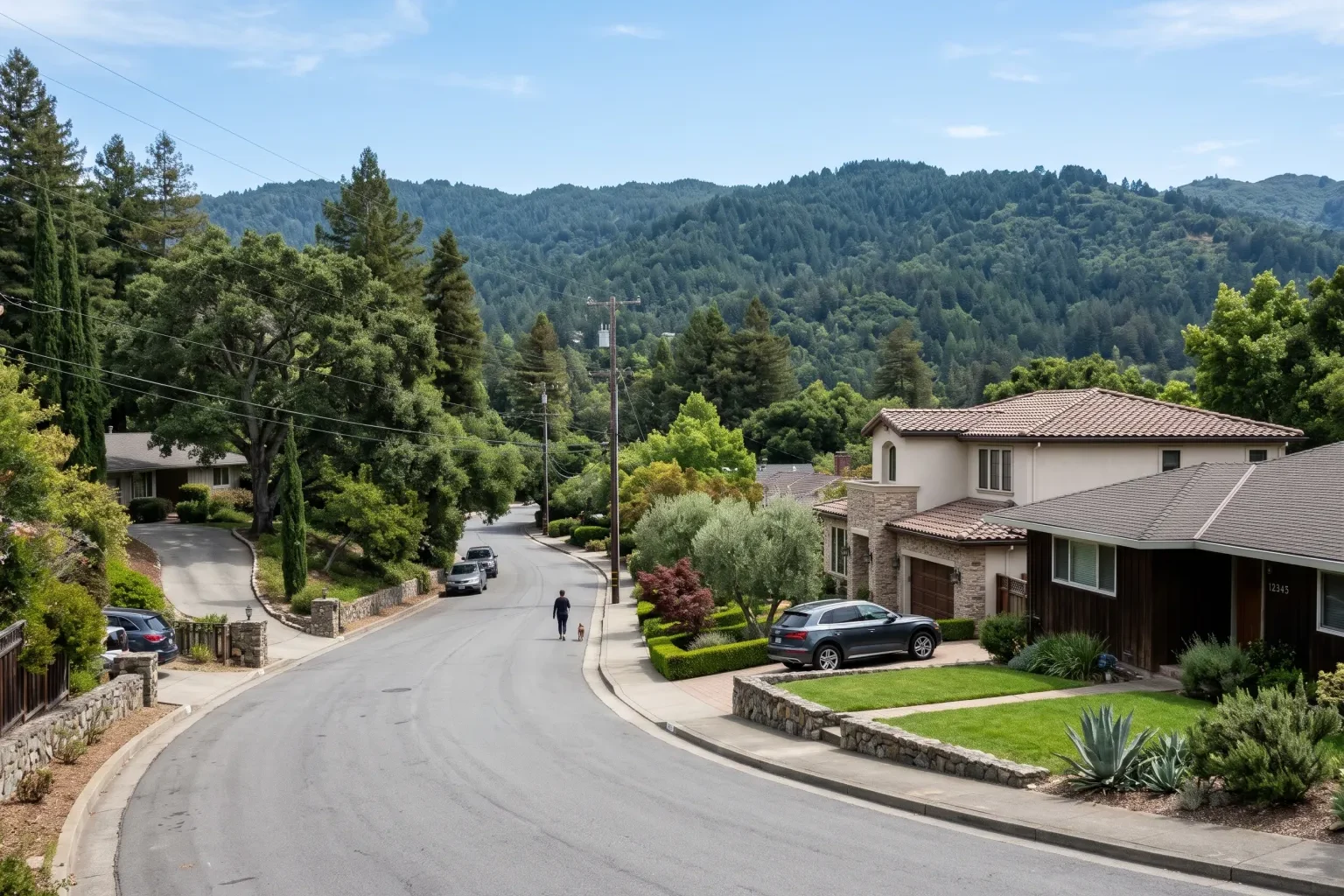
Saratoga sits about 10 miles southwest of our San Jose base, and we install air conditioning in homes throughout the 95070 ZIP code. Summers in the Santa Clara Valley are dry, and parts of the valley away from the Bay run noticeably hotter than areas near the water. Many Saratoga homes were built without central cooling or have aging systems that struggle on warm afternoons. A good installation starts with the house itself: how it is built, how air moves through it, and what equipment already serves it. This page explains how we approach a new AC installation in Saratoga and what to decide before you choose a system.
Sizing the System to Your Saratoga Home
An air conditioner that is too large cools the house in short bursts, leaves humidity behind, and wears out parts faster. One that is too small runs nonstop on hot days and still falls behind. We size equipment with a load calculation, not by square footage alone.
Saratoga has a wide mix of homes, from single-story ranch houses to larger two-story homes and houses on sloped lots. Each one gains heat differently, so we look at the details that change the numbers.
- Window area and which direction the main windows face
- Attic insulation and how well the attic is ventilated
- Ceiling heights, additions, and rooms over garages
- Shade from trees and how much afternoon sun the house gets
- How many people live there and which rooms get the most use
Central AC or a Heat Pump?
A heat pump cools in summer just like a central air conditioner, and it also heats in winter. Because Santa Clara Valley winters are mild and damp rather than severely cold, a heat pump can cover heating needs for many homes here.
Timing matters too. Under Bay Area Air District rules, natural gas furnaces manufactured from 2029 must meet a zero-NOx emission standard, which in practice points homeowners toward heat pumps when a furnace is replaced after that date. These rules do not require you to replace working equipment; they apply only when a furnace fails or is replaced. If your furnace is still working, you can add central AC now. If your furnace is near the end of its life, installing a heat pump at the same time may save a second project later.
For homes without ductwork, or for a single addition or upstairs area, a ductless mini-split can be the simpler route. We walk through all three options and explain the tradeoffs for your specific house.
Checking Ducts, Electrical, and Placement
New equipment only performs as well as the system around it. Before we recommend a unit, we inspect the parts of the house that affect how it will run.
- Ductwork: leaks, crushed runs, poor insulation, and whether duct sizes can carry the airflow a new system needs
- Electrical panel: available capacity and circuit space for the outdoor unit
- Outdoor unit location: clearance, drainage, noise toward bedrooms and neighbors, and access for service
- Indoor equipment: space in the attic, garage, or closet and a safe path for the condensate drain
- Thermostat: placement and whether it works with the system you choose
Incentives and Tax Credits to Know About
The federal Energy Efficient Home Improvement Credit covered qualifying heat pumps placed in service before December 31, 2025. It is not available for new installations after that date, so do not plan your budget around it.
Bay Area homeowners can still check BayREN and their local clean energy provider for heat pump and electrification incentives. Amounts and availability change by funding cycle, so we confirm the current offer before we include it in a quote.
What Installation Day Looks Like
Once you approve a plan, we schedule the work and explain what to expect. On installation day we protect floors and work areas, set the indoor and outdoor equipment, connect refrigerant lines, wiring, and drains, and make any duct changes we agreed on.
Before we leave, we start the system, check refrigerant charge and airflow, test the thermostat, and show you how to operate it and when to change the filter. We also serve nearby Monte Sereno, Cupertino, Campbell, Los Gatos, and Santa Clara.
More services in Saratoga
- AC Repair in SaratogaLocal service & repairs
- Heating Repair in SaratogaLocal service & repairs
- Heat Pump Installation in SaratogaLocal service & repairs
- Furnace Repair in SaratogaLocal service & repairs