
The short answer
A ductless mini-split is a good fit when your home lacks ducts, has rooms that never get comfortable, or needs heating and cooling for an addition or converted space. We assess room sizes, insulation, electrical capacity, and unit placement before recommending a system. We give you a written proposal based on your home.
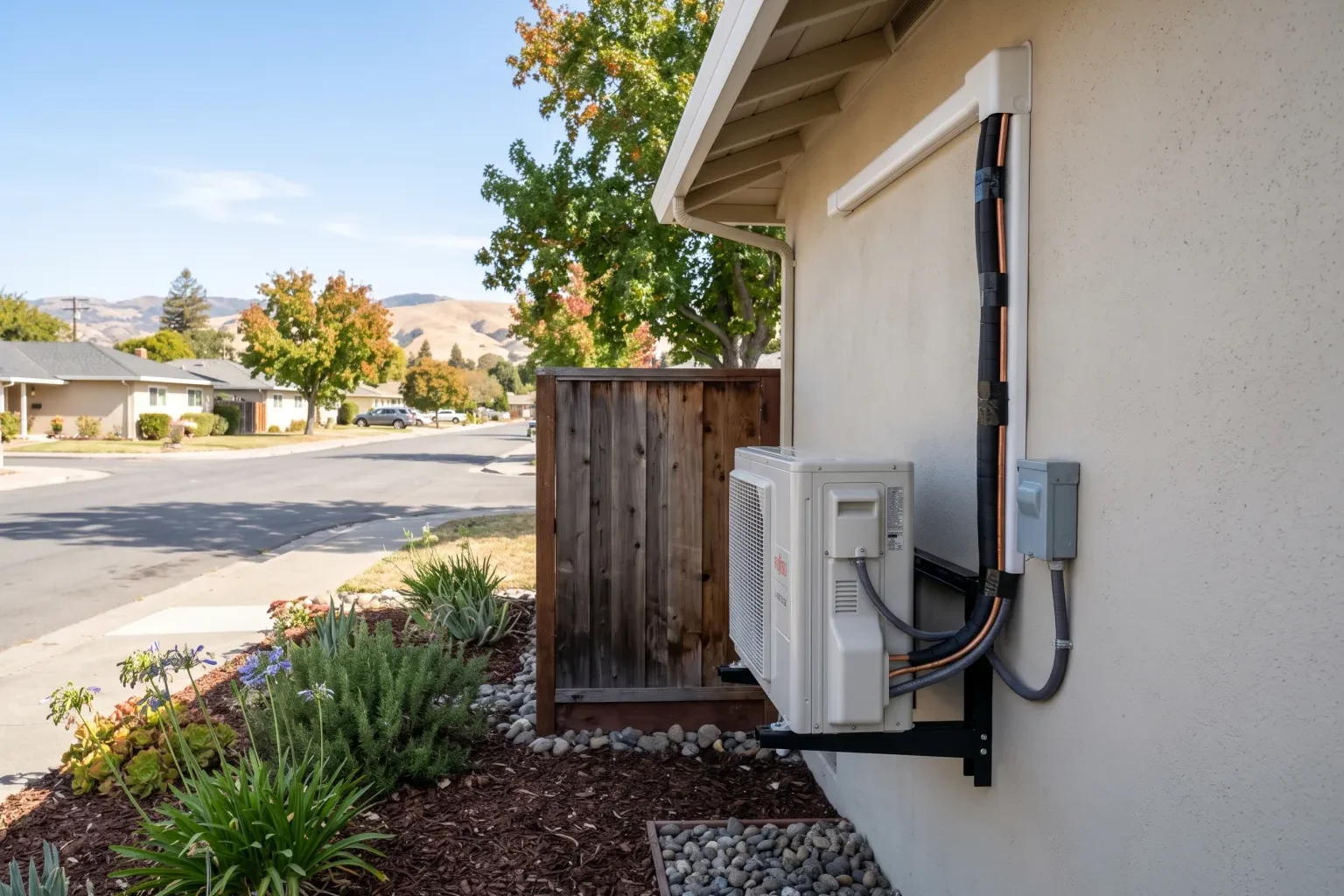
A ductless mini-split heats and cools individual rooms without ductwork. An outdoor heat pump connects to one or more indoor units through a small refrigerant line set that passes through a hole in the wall. For many homes in San Jose and nearby cities, it's a practical way to add comfort without opening walls and ceilings. That includes older houses without ducts, converted garages, additions, and upstairs bedrooms that bake in summer. This page explains when a mini-split makes sense, what we look at before recommending one, how it compares with repairing or replacing what you have, what drives the cost, and what to expect when we come out.
Signs a ductless mini-split may be right for your home
The Santa Clara Valley has dry summers and mild, damp winters, and inland and southern parts of the valley run noticeably hotter in summer than areas near the Bay. Many homes here need real cooling for part of the year and modest heat the rest, and a heat pump handles that work well.
None of these signs automatically means a mini-split is the answer. A ducted heat pump or a repair might fit better, which is why we start with an assessment.
- Your home has no ductwork, or the existing ducts are undersized, leaky, or run through a hot attic.
- One or two rooms are always too hot or too cold while the rest of the house is fine.
- You've added a room, finished a garage, or built an accessory dwelling unit and don't want to extend ducts.
- You rely on window or portable air conditioners that are noisy, block windows, or can't keep up.
- You heat with wall heaters, electric baseboards, or space heaters and want more even, efficient heat.
- Your furnace is aging and you want to weigh electric options before it fails.
What we check before recommending a system
A mini-split has to be sized and placed for the specific rooms it serves. An oversized unit cycles on and off too often, controls humidity poorly, and wastes energy. An undersized one leaves rooms uncomfortable on the hottest afternoons. We look at the whole house, not just square footage.
We'll also ask how sensitive you are to noise and how you feel about the look of wall-mounted units. For some rooms, a ceiling cassette, floor console, or concealed ducted unit may make more sense.
- Room sizes, ceiling heights, window area, sun exposure, and insulation
- Which rooms you use and when, so zones match how you live
- Indoor unit locations with clear airflow and a sensible path for the line set and condensate drain
- Outdoor unit placement, including a level pad or wall bracket, clearance for airflow and service, and distance from bedroom windows
- Electrical panel capacity and whether a new dedicated circuit is needed
- Existing heating and cooling equipment and how the new system will work with or replace it
Repair, replace, or add a mini-split
If you already have a mini-split that isn't working right, a new one isn't always the first step. Many problems can be repaired, including a clogged filter or coil, a blocked condensate line, a failed sensor, a refrigerant leak at a fitting, or a bad control board. We diagnose first and tell you what we find.
Replacement starts to make sense when there's a major failure such as a compressor problem. It also makes sense when repairs keep stacking up, parts are hard to get, or the unit was poorly sized or installed from the start. If you have a central system, the real question is often which of three paths fits best. You can add a mini-split for problem rooms, replace the whole system with a ducted heat pump, or go fully ductless.
Local rules play a part, too. Bay Area Air District appliance rules don't require you to replace working equipment. They apply only when an existing furnace or water heater fails or is replaced. However, natural gas furnaces manufactured from 2029 must meet a zero-NOx emission standard, which in practice points homeowners toward heat pumps when a furnace is replaced after that date. If your furnace is near the end of its life, planning ahead beats deciding in an emergency.
What affects the cost
We quote every mini-split job after seeing the home, because the cost depends on several factors.
On incentives: the federal Energy Efficient Home Improvement Credit (25C) covered qualifying heat pumps placed in service before December 31, 2025. It isn't available for new installations after that date. Bay Area homeowners can check BayREN and their local clean energy provider for current heat pump and electrification incentives. Amounts and availability change by funding cycle, so we confirm the current offer before including it in a quote.
- Number of indoor units and zones, and whether they share one multi-zone outdoor unit or use separate single-zone units
- Equipment capacity and efficiency rating
- Indoor unit style: wall-mounted, ceiling cassette, floor console, or concealed ducted
- Line set length and routing difficulty, such as finished walls, multiple stories, or long exterior runs
- Electrical work, including new circuits or panel upgrades
- Condensate drainage, especially where a pump is needed
- Permit and inspection requirements in your city
- Removal of window units, wall heaters, or other old equipment
How a visit works
We start by talking through what's bothering you, such as hot bedrooms, a cold addition, high bills, or an old furnace, and which rooms matter most.
On site, a technician walks the home, measures rooms, checks the electrical panel, and looks at possible indoor and outdoor unit locations. We explain options as we go and answer your questions.
Afterward, you get a written proposal covering equipment, unit locations, line set routing, electrical work, and permits. If a reasonable repair or simpler option exists, we'll tell you.
On installation day, we protect floors and furniture, mount the units, and run and seal the line set. Then we make the electrical connections, pressure-test and evacuate the refrigerant lines, and start the system. Before we leave, we show you how to use the controls, clean the filters, and recognize normal operation.