
The short answer
You likely need duct cleaning if you see visible dust or debris blowing from vents, find signs of pests or mold in the ductwork, or have just finished a remodel. We inspect first, clean only when it makes sense, and point out any leaks, damage, or sections that are better repaired or replaced.
Your ducts carry every bit of heated and cooled air in your home, but most people never see them. Over time they collect dust, pet hair, construction debris, and sometimes moisture or pests. Leaky or disconnected sections can also pull in dusty attic or crawlspace air. SwiftAir Conditioning Repair cleans and inspects duct systems for homeowners in San Jose and nearby cities like Santa Clara, Sunnyvale, Campbell, and Milpitas. We'll tell you plainly whether your ducts need cleaning, repair, replacement, or nothing at all. Not every home needs duct cleaning on a schedule. When it is warranted, though, it can cut down on dust, help airflow, and give us a close look at the condition of a part of your system that's easy to forget.
Signs Your Ducts May Need Cleaning
Dust on furniture by itself doesn't prove your ducts are dirty, since every home gets dusty. The signs below are more specific and worth a closer look. In the Santa Clara Valley, dry summers mean the air conditioning runs hard for months in inland and southern neighborhoods. Mild, damp winters can leave condensation in ducts that run through cool attics and crawlspaces.
If you notice one or more of these, it's reasonable to have the system inspected before deciding on cleaning.
- Puffs of dust or debris come out of supply vents when the system starts
- Return grilles or the area just inside them are coated with heavy, matted dust
- You've recently remodeled, sanded drywall, or refinished floors without sealing the vents
- Droppings, nesting material, or insect activity inside the ductwork
- Visible mold growth inside ducts or on the air handler
- A musty smell that gets stronger when the fan runs
- Air filters clog much faster than they used to
- Some rooms get weak airflow even though the system is running normally
What We Check During an Inspection
Cleaning dirty ducts that are also torn or disconnected only solves half the problem. That's why we look at the whole air distribution system, not just the inside of the ducts. We use inspection tools to see inside runs we can't reach by hand. We'll show you what we find so you can see the condition for yourself.
- Supply and return ducts for buildup, debris, and blockages
- Flexible duct for tears, crushed sections, sagging, and kinks
- Joints and connections at registers, boots, and the plenum for gaps or separation
- Insulation on ducts running through attics and crawlspaces
- Signs of moisture, condensation, or mold
- Evidence of rodents or insects
- The blower, evaporator coil area, and filter rack, since a dirty blower can re-dirty clean ducts
- Return air sizing and whether rooms are getting balanced airflow
Repair vs. Replace: Your Options
Many duct systems only need cleaning and a few targeted repairs. We can seal leaky joints with mastic or approved tape, reconnect loose runs, replace a damaged register boot, re-hang sagging flex duct, and fix crushed sections. When the ducts are basically sound, this is usually the most sensible path.
Replacement makes more sense when problems are widespread. That includes flex duct with brittle or deteriorating outer jackets, insulation that has broken down, widespread rodent damage, mold that can't be reliably cleaned from porous duct material, or a layout that was never sized correctly for the home. In those cases, cleaning old ductwork just postpones the real fix. We may recommend replacing specific runs or the full system.
If you're also thinking about replacing a furnace or switching to a heat pump, it's a good time to evaluate the ducts too. Under Bay Area Air District rules, gas furnaces manufactured from 2029 must meet a zero-NOx standard, which in practice points many homeowners toward heat pumps at replacement time. The rules don't require replacing working equipment, but a new system works best with ducts that are sealed and sized correctly.
What Affects the Cost
We give you a clear quote after we've seen the system, because duct jobs vary a lot from house to house. These are the main factors that shape the scope of the work:
- The size of the home and the number of supply and return vents
- How many HVAC systems serve the house
- How easy the ducts are to reach in the attic, crawlspace, or between floors
- The type of ductwork: rigid metal, flex duct, or duct board
- How much buildup or debris there is, including remodel dust
- Whether pest cleanup, mold remediation, or sanitizing is needed
- Repairs found during inspection, such as sealing, reconnecting, or replacing sections
- Whether cleaning the blower and coil is included in the scope
How a Visit Works
We start by asking what you've noticed, such as dust, smells, uneven rooms, or recent work on the house. Then we inspect the system and walk you through what we found, including whether cleaning is actually worth doing. If it is, we explain the scope before any work begins.
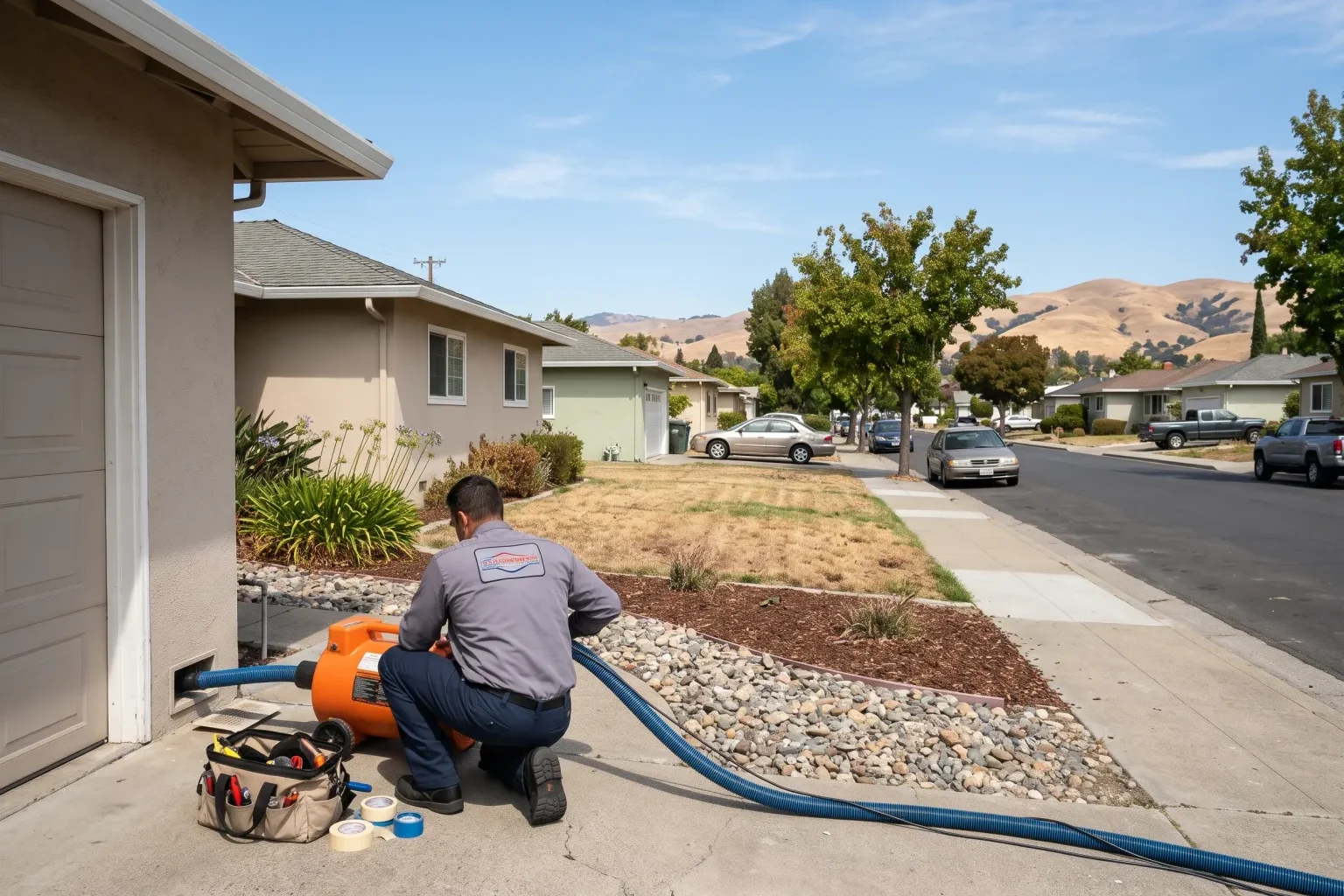
For cleaning, we protect floors and furniture near the work area and seal off registers. We connect negative-pressure equipment so loosened debris gets pulled out of the system instead of into your rooms. We use brushes and air tools to loosen buildup in each run, then clean the registers and grilles. When it's part of the job, we also clean the blower compartment. Any repairs we agreed on get done during the same visit when possible.
Before we leave, we put in a fresh filter if you'd like and check airflow at the vents. We also show you the results. We'll also mention anything worth watching, like a section of aging flex duct that may need attention later.