
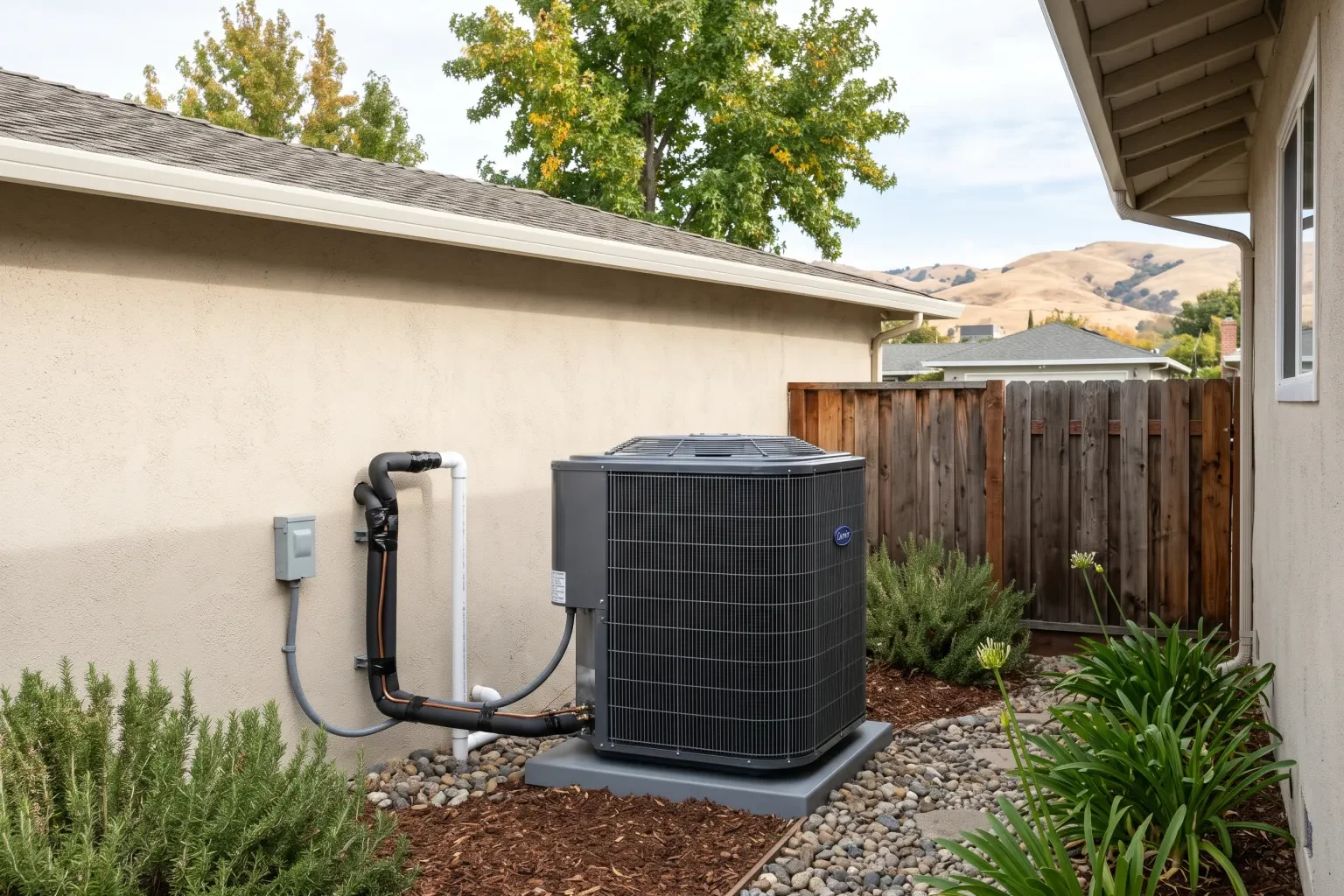
The short answer
HVAC maintenance is a hands-on inspection and cleaning that catches small problems before they turn into breakdowns and keeps your system running efficiently. Most San Jose homes should schedule it once a year, or twice a year for heat pumps. Book sooner if you notice weak airflow, new noises, or rising energy bills.
Most heating and cooling problems don't appear out of nowhere. A clogged filter, a dirty coil, or a loose electrical connection usually builds for months before the system quits on a hot afternoon or a cold morning. Regular HVAC maintenance catches those small issues early and keeps your system running the way it was designed to. It also gives you a clear picture of your equipment's condition before you have to make a decision under pressure. SwiftAir Conditioning Repair maintains air conditioners, furnaces, and heat pumps for homeowners in San Jose and nearby cities, including Santa Clara, Campbell, Sunnyvale, Milpitas, and Cupertino. This page explains how to tell if your system is due, what a maintenance visit covers, and how the visit works.
Signs Your System Needs Maintenance
The Santa Clara Valley has dry summers and mild, damp winters. Inland and southern parts of the valley run noticeably hotter in summer than areas near the Bay. Many systems here work hardest on the cooling side, so summer is usually when neglected equipment starts to struggle.
Plan on maintenance once a year for an air conditioner or a furnace. Heat pumps handle both heating and cooling, so they benefit from a visit in spring and another in fall. Beyond the calendar, these signs suggest it's time:
- Some rooms are noticeably warmer or cooler than others
- Airflow from the vents is weaker than it used to be
- The system runs long cycles or turns on and off frequently
- Energy bills are climbing even though you use the system the same way
- New noises, such as rattling, buzzing, squealing, or clicking at startup
- Musty, burning, or dusty smells when the system turns on
- Water around the indoor unit, or ice on the refrigerant lines
- More dust in the house, or allergy symptoms that get worse when the system runs
- No one has looked at the equipment in more than a year
What We Check During a Maintenance Visit
A maintenance visit is a hands-on inspection and cleaning, not a quick glance at the thermostat. The exact checklist depends on your equipment: a central air conditioner, a gas furnace, a heat pump, or a combination. A typical visit covers:
We record what we find, including measurements, so you have a baseline to compare against next time. If something needs attention, we explain what it is and why it matters before doing any additional work.
- Air filter condition, and replacement if needed
- Thermostat operation and settings
- Outdoor coil cleaning, plus clearing leaves and debris from around the unit
- Indoor evaporator coil inspection
- Condensate drain line and pan, cleared so water drains properly
- Refrigerant pressures and the temperature difference across the coil
- Electrical connections, capacitors, and contactors
- Blower motor, blower wheel, and belt (if your system has one)
- Furnace burners, flame sensor, ignition, and a visual check of the heat exchanger
- Safety controls and limit switches
- Venting on gas appliances
- Visible ductwork and connections near the equipment
Repair or Replace: What Maintenance Tells You
A maintenance visit gives you an honest read on where your equipment stands. Most of the time the answer is simple. Either the system is in good shape, or it needs a minor repair such as a new capacitor or a cleared drain line. Sometimes the findings point to a bigger decision.
Repair usually makes sense when the system is in the middle of its working life, the problem is isolated, and the rest of the equipment checks out. Replacement is worth considering in three situations: an older system needs a major component such as a compressor or heat exchanger, repairs are becoming frequent, or the system can no longer keep your home comfortable.
It also helps to know the local rules. Bay Area Air District appliance rules do not require you to replace working equipment. They apply only when an existing furnace or water heater fails or is replaced. Under Rule 9-4, gas furnaces manufactured starting in 2029 must meet a zero-NOx emission standard. In practice, that points homeowners toward heat pumps when they replace a furnace after that date.
Water heaters follow a separate rule, Rule 9-6, which set the zero-NOx date for small water heaters for 2027. The Air District Board is considering amendments in November 2026 that could delay that date. Check the current rule before you plan a water heater replacement.
If you're considering a heat pump, note that the federal Energy Efficient Home Improvement Credit no longer applies. It covered only qualifying heat pumps placed in service before December 31, 2025. You can still check BayREN and your local clean energy provider for current heat pump and electrification incentives. Those amounts and programs change with each funding cycle, so we confirm the current offer before including it in a quote.
What Affects the Cost of Maintenance
You'll get a clear quote before any work starts. The cost depends on your home and your equipment:
Repairs found during the visit are quoted separately, and you decide whether to go ahead.
- The type and number of systems: air conditioner only, furnace and air conditioner, heat pump, or multiple zones
- How long it has been since the last service, and how dirty the coils and components are
- How easy the equipment is to reach, such as an attic, crawlspace, closet, or rooftop unit
- Whether filters or other parts need to be replaced
- Any repairs you choose to have done
- Whether you want a one-time visit or recurring seasonal service
How a Maintenance Visit Works
Spring and fall are the easiest times to schedule. That way your system is checked before the heaviest cooling or heating season, and appointments are easier to get than during a summer heat wave. Here's what to expect:
- Scheduling: Choose a time that works for you, and tell us about any problems you've noticed.
- Arrival: The technician asks about your concerns and how the system has been running.
- Inspection and cleaning: We work through the checklist on the indoor and outdoor equipment. How long this takes depends on how many systems you have and how easy they are to reach.
- Review: We walk you through what we found, including any wear or problems and how urgent each one is.
- Next steps: If repairs are needed, you get a quote and decide what to do. If everything checks out, we note when the next visit is due.